You may also like:

Related Posts Plugin for WordPress, Blogger...

El Topo, 1971

This violent and allegorical Mexican western attracted a cult following in its day. It is the story of El Topo, a gunslinger who sets out for revenge against the outlaws who slew his wife. ...

Faster Pussycat Kill Kill (1965)

Exploitation maven Russ Meyer created a cult classic with this turbo-charged action film. Three curvaceous go-go dancers in a cool sports car go on a desert crime spree, led by Varla (the amazing Tura Satana), a busty, nasty woman dressed entirely in black.

L'uccello dalle piume di cristallo (The Bird With the Crystal Plumage) (1969)

This trend-setting thriller put its director, Dario Argento, on the international map and began a flood of imitative mystery-horror hybrids which dominated Italian genre output in the early 1970s.

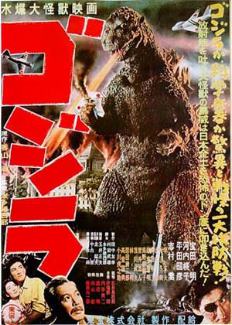
Gojira (1954)

One of the longest-running series in film history began with Ishiro Honda's grim, black-and-white allegory for the devastation wrought on Japan by the atomic bomb..

MAD MAX (1979)

This stunning, post-apocalyptic action thriller from director George Miller stars Mel Gibson as Max Rockatansky, a policeman in the near future who is tired of his job.

Showing posts with label Classics. Show all posts

Wednesday, June 5, 2013

Duel (1972)


Driving down a deserted Southern California highway at a safe and sane 55 miles per hour, David Mann (Dennis Weaver) steps on the pedal to pass a large gas trailer truck. Moments later, the truck is back, dangerously tailgating Mann before abruptly cutting him off. 
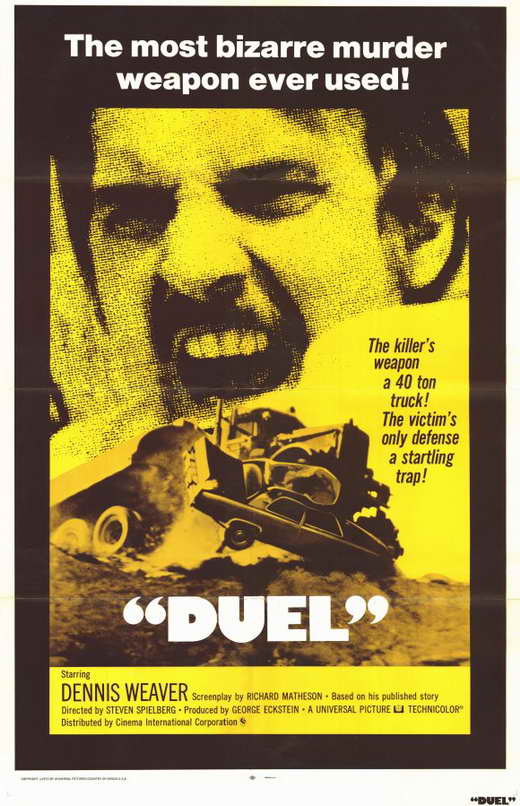
For the next 90 minutes, Mann and the never-seen truckdriver are pitted against one another in a motorized duel to the death. Author Richard Matheson conceived Duel after a similar experience with a reckless trucker. 

The story first appeared in Playboy magazine, then was picked up for adaptation by the producers of The ABC Movie of the Week. The director chosen to helm Duel on location in Soledad Canyon was a bright 23-year-old who'd shown promise on such series as Night Gallery and Columbo: Steven Spielberg. First telecast on December 18, 1971, Duel was so popular that a somewhat longer version (with added violence and profanity) was prepared for theatrical release in 1983. ~ Hal Erickson, Rovi http://www.rottentomatoes.com

PG,
Steven Spielberg
Richard Matheson
Free movie thanks to:
MrsMovieLovesMovies

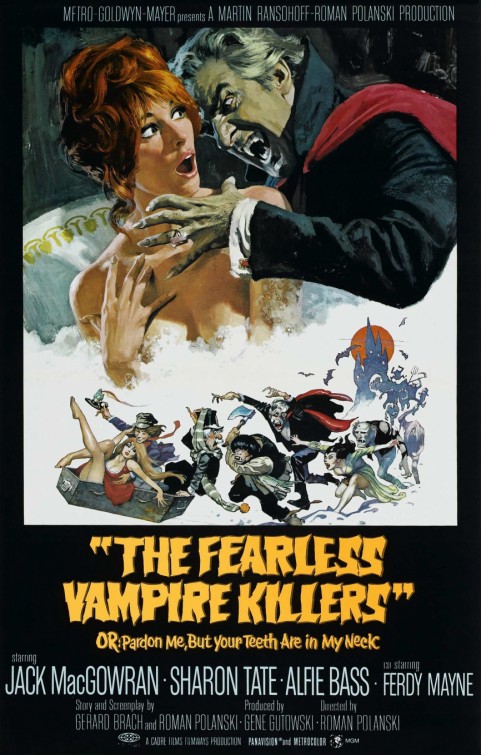
The Fearless Vampire Killers (1967)


A pair of bumbling vampire-hunters attempts to destroy an undead nobleman and his cronies and rescue a buxom maiden in actor/director Roman Polanski's playful update of the venerable vampire genre. Bat expert and vampire obsessive Professor Abronsius (Jack MacGowran) barely survives his journey through the Alps into snowy Slovenia to continue his oft-maligned research into the undead. Thawed out by his hapless assistant, Alfred (Polanski), and the frisky local innkeeper, Shagal (Alfie Bass), Abronsius quickly notices the overabundance of raw garlic as a decorating motif in the inn and its environs. Too ineffectual to save Shagal from having his blood sucked, the professor and Alfred miss the boat again when the mysterious Count Von Krolock (Ferdinand Mayne) kidnaps Shagal's built, beautiful daughter, Sarah (Sharon Tate). The itinerant vampire hunters must travel through the icy wilderness to Von Krolock's abode and evade his manservant and his effete son Herbert (Iain Quarrier) before Sarah joins the ranks of the ghouls. 

They soon learn, however, that the luxury-starved lass actually enjoys her captors' lavish attentions. The action climaxes during a costume ball attended by a phalanx of blood-suckers, although the laughs and surprises continue until the very end. Sixteen minutes of unauthorized cuts have been restored in some video editions of The Fearless Vampire Hunters, although the animated credits sequence that replaced them is also retained. The film marks the feature debut of Tate, who replaced Polanski's original choice, Jill St. John, on the advice of producer Martin Ransohoff. ~ Brian J. Dillard, Rovi http://www.rottentomatoes.com
Roman Polanski 

You can see the complete film here for free:
http://viooz.co/movies/1736-the-fearless-vampire-killers-1967.html

Monday, May 6, 2013

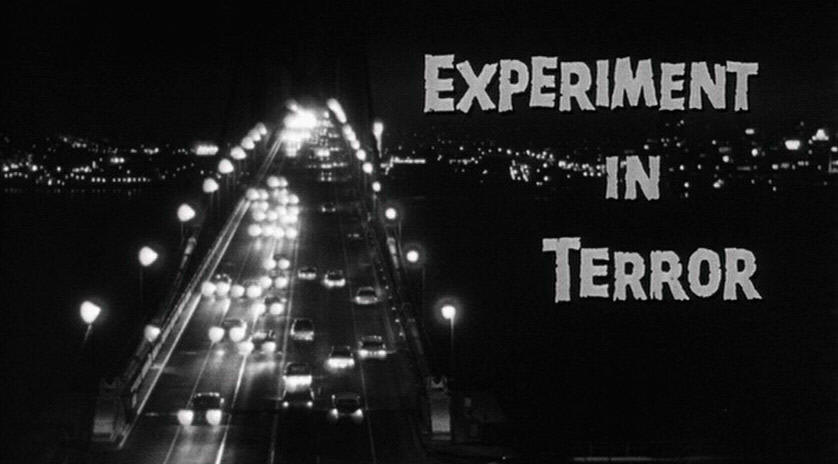
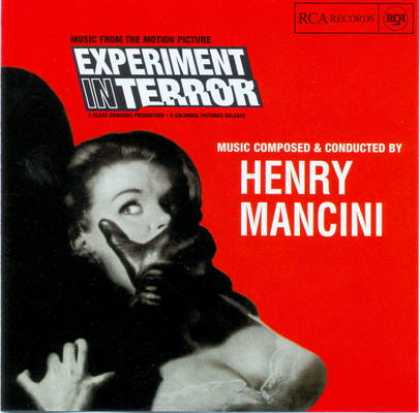
Experiment in Terror (1962)

 
Bank teller Lee Remick is accosted in her garage one dark night by asthmatic psycho Ross Martin. He forces her to go through with an elaborate robbery scheme, threatening to kill Lee's teen-aged sister Stefanie Powers if the police are summoned. 

 (Original music composed by Henry Mancini)

FBI agent Glenn Ford suspects that something is amiss and advises Lee to play along with Martin, hoping in this way to capture this dangerous criminal with a minimum of bloodshed. Unfortunately, Martin is as clever as he is deadly, always managing to stay one step ahead of Ford. The now-famous climax of Experiment in Terror finds the feds closing in on Martin during a crowded night baseball game at San Francisco's Candlestick Park. Experiment in Terror is based on the Gordons' novel Operation Terror. ~ Hal Erickson, Rovi
Unrated,
Horror, Mystery & Suspense, Classics
Blake Edwards
Gordon Gordon
Free movie thanks to:  Gothikam


Tuesday, April 23, 2013

L'uccello dalle piume di cristallo (The Bird With the Crystal Plumage) (1969)

This trend-setting thriller put its director, Dario Argento, on the international map and began a flood of imitative mystery-horror hybrids which dominated Italian genre output in the early 1970s.

Tony Musante, best known for the television series Toma, portrays an American who witnesses the murder of a woman at a trendy Rome art gallery. Before long, Musante finds himself targeted by a mysterious killer. Based on a story by Byron Edgar Wallace, Bird and hints at the flamboyance which would become Argento's trademark. This and Argento's subsequent two films Il Gatto a Nove Code and Quattro Mosche di Velluto Grigio were much less horror-oriented than his later work. ~ Robert Firsching, Rovi (http://www.rottentomatoes.com)
 
PG, 1 hr. 38 min.
Drama, Art House & International, Mystery & Suspense
Dario Argento
Free movie thanks to:  Shockcinema13 


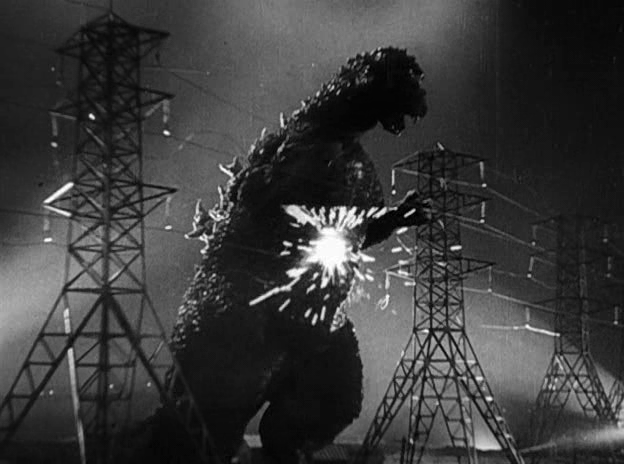
Gojira (1954)

One of the longest-running series in film history began with Ishiro Honda's grim, black-and-white allegory for the devastation wrought on Japan by the atomic bomb. As his visual metaphor, Honda uses a 400-foot-tall mutant dinosaur called Gojira, awakened from the depths of the sea as a rampaging nuclear nightmare, complete with glowing dorsal fins and fiery, radioactive breath.


Crushing ships, villages, and buildings in his wake, Gojira marches toward Tokyo, bringing all of the country's worst nightmares back until an evil more terrible bomb -- capable of sucking all the oxygen from the sea -- returns the monster to its watery grave. The original film is chilling, despite some rather unconvincing man-in-a-suit special effects, and brimming with explicitly stated anti-American sentiment. All of that was removed for the U.S. release directed by Terry Morse. It was replaced with bad dubbing and tedious added footage starring Raymond Burr. The resulting edit was just another monster movie, but was still popular enough to assure future Toho Studios monster films a wide American release. ~ Robert Firsching, Rovi (http://www.rottentomatoes.com)
Unrated, 1 hr. 38 min.
Action & Adventure, Horror, Art House & International, Science Fiction & Fantasy
Ishirô Honda
Free movie thanks to:  粥稀稀ZXX

Monday, April 22, 2013

Mad Max (1979)

This stunning, post-apocalyptic action thriller from director George Miller stars Mel Gibson as Max Rockatansky, a policeman in the near future who is tired of his job. Since the apocalypse, the lengthy, desolate stretches of highway in the Australian outback have become bloodstained battlegrounds. Max has seen too many innocents and fellow officers murdered by the bomb's savage offspring, bestial marauding bikers for whom killing, rape, and looting is a way of life. He just wants to retire and spend time with his wife and son but lets his boss talk him into taking a peaceful vacation and he starts to reconsider. Then his world is shattered as a gang led by the evil Toecutter (Hugh Keays-Byrne) murders his family in retaliation for the death of one of its members. Dead inside, Max straps on his helmet and climbs into a souped-up V8 racing machine to seek his bloody revenge. Despite an obviously low budget and a plot reminiscent of many spaghetti Westerns, Mad Max is tremendously exciting, thanks to some of the most spectacular road stunts ever put on film. 


Cinematographer David Eggby and stunt coordinator Grant Page did some of their best work under Miller's direction and crafted a gritty, gripping thrill ride which spawned two sequels, numerous imitations, and made Mel Gibson an international star. One sequence, in which a man is chained to a car and must cut off a limb before the machine explodes is one of the most tense scenes of the decade. The American version dubbed all the voices -- including Gibson's -- in a particularly cartoonish manner. Trivia buffs should note that Max's car is a 1973 Ford Falcon GT Coupe with a 300 bhp 351C V8 engine, customized with the front end of a Ford Fairmont and other modifications. ~ Robert Firsching, Rovi (http://www.rottentomatoes.com)


R, 1 hr. 33 min.
Action & Adventure, Science Fiction & Fantasy, Cult Movies
George Miller
George Miller
Free movie thanks to:  Sub Movie


A Clockwork Orange (1971)


Stanley Kubrick dissects the nature of violence in this darkly ironic, near-future satire, adapted from Anthony Burgess's novel, complete with "Nadsat" slang. Classical music-loving proto-punk Alex (Malcolm McDowell) and his "Droogs" spend their nights getting high at the Korova Milkbar before embarking on "a little of the old ultraviolence," such as terrorizing a writer, Mr. Alexander (Patrick Magee), and gang raping his wife (who later dies as a result). After Alex is jailed for bludgeoning the Cat Lady (Miriam Karlin) to death with one of her phallic sculptures, Alex submits to the Ludovico behavior modification technique to earn his freedom; he's conditioned to abhor violence through watching gory movies, and even his adored Beethoven is turned against him. 


Returned to the world defenseless, Alex becomes the victim of his prior victims, with Mr. Alexander using Beethoven's Ninth to inflict the greatest pain of all. When society sees what the state has done to Alex, however, the politically expedient move is made. Casting a coldly pessimistic view on the then-future of the late '70s-early '80s, Kubrick and production designer John Barry created a world of high-tech cultural decay, mixing old details like bowler hats with bizarrely alienating "new" environments like the Milkbar. Alex's violence is horrific, yet it is an aesthetically calculated fact of his existence; his charisma makes the icily clinical Ludovico treatment seem more negatively abusive than positively therapeutic. Alex may be a sadist, but the state's autocratic control is another violent act, rather than a solution. Released in late 1971 (within weeks of Sam Peckinpah's brutally violent Straw Dogs), the film sparked considerable controversy in the U.S. with its X-rated violence; after copycat crimes in England, Kubrick withdrew the film from British distribution until after his death. Opinion was divided on the meaning of Kubrick's detached view of this shocking future, but, whether the discord drew the curious or Kubrick's scathing diagnosis spoke to the chaotic cultural moment, A Clockwork Orange became a hit. On the heels of New York Film Critics Circle awards as Best Film, Best Director, and Best Screenplay, Kubrick received Oscar nominations in all three categories. ~ Lucia Bozzola, Rovi (http://www.rottentomatoes.com)
 
R, 2 hr. 17 min.
Drama, Mystery & Suspense, Classics, Science Fiction & Fantasy
Stanley Kubrick
Stanley Kubrick
Freemovie thanks to:  Retrofilms.in

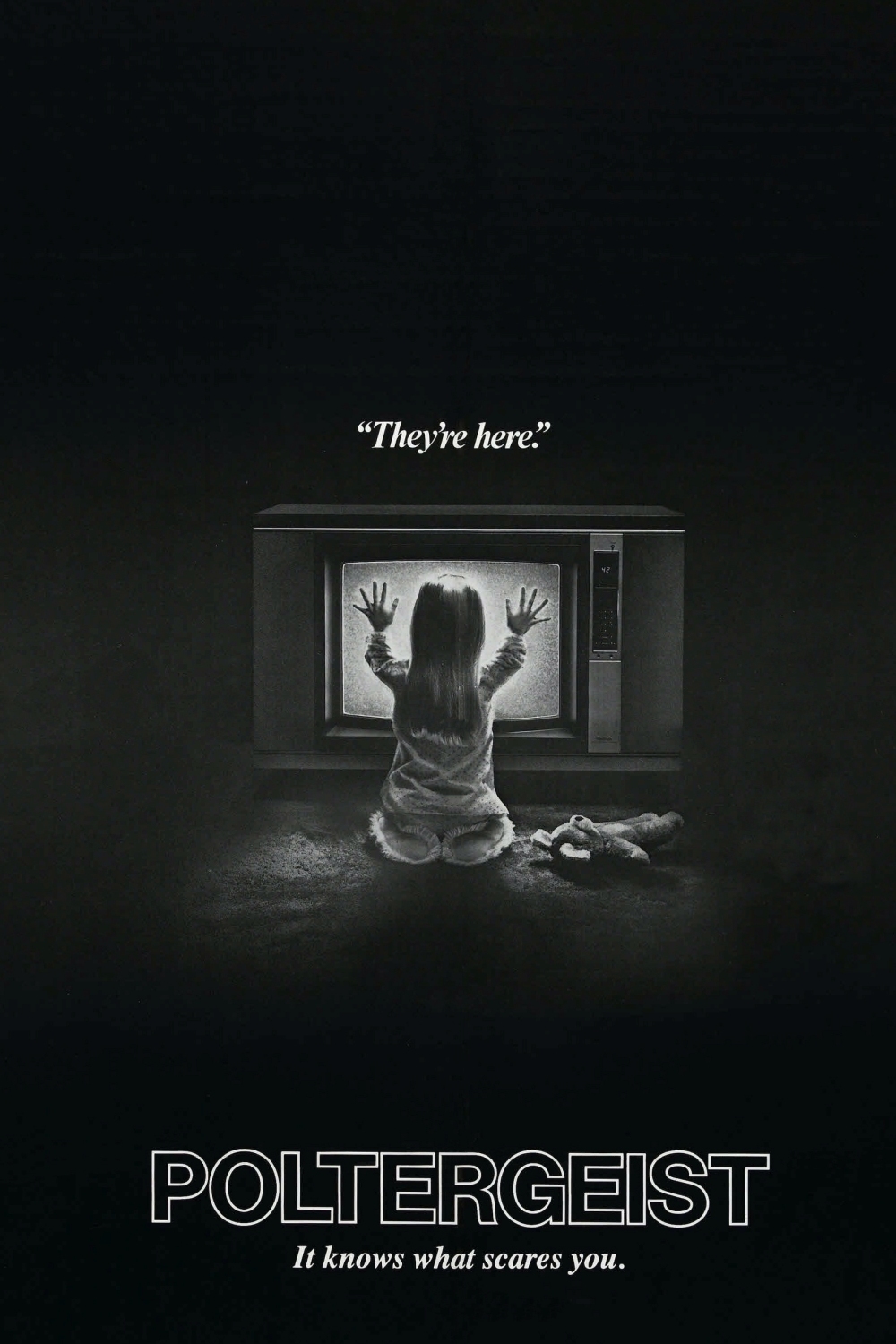
Poltergeist (1982)

With Poltergeist, directed by Tobe Hopper, Steven Spielberg had his first great success as a producer. Released around the same time as Spielberg's E.T., the film presents the dark side of Spielberg's California suburban track homes. The film centers on the Freeling family, a typical middle class family living in the peaceful Cuesta Verde Estates. The father, Steve (Craig T. Nelson), has fallen asleep in front of the television, and the dog saunters around the house revealing the other family members -- Steve's wife Diane (JoBeth Williams), sixteen-year-old daughter Dana (Dominique Dunne), eight-year-old son Robbie (Oliver Robins), and five-year-old Carol Ann (Heather O'Rourke). Soon strange things begin to happen around the house; the pet canary dies, mysterious storms occur, and Carol Ann is summoned to the TV set, where a strange shaft of green light hits her and causes the room to shake ("They're he-e-ere!"). As curious events continue, Carol Ann is repeatedly drawn to the television, where she begins to talk to "the TV people." Soon Carol Ann is sucked into a closet, disappearing from this reality plane. Unable to find his daughter, Steve consults Dr. Lesh (Beatrice Straight), a para-psychologist from a nearby college. Lesh finds that paranormal phenomena is so strong in the Freelong household she is unable to deal with it and sends for clairvoyant and professional exorcist Tangina (Zelda Rubinstein) to examine the house in hopes of finding Carol Ann. Tangina makes a horrifying discovery: Carol Ann is alive and in the house, but is being held on another spectral plane. ~ Paul Brenner, Rovi (http://www.rottentomatoes.com/)


PG, 1 hr. 54 min.
Horror
Tobe Hooper
Michael Grais, Mark Victor, Steven Spielberg


Sub Movie

Night of the Living Dead (1968)


When unexpected radiation raises the dead, a microcosm of Average America has to battle flesh-eating zombies in George A. Romero's landmark cheapie horror film. Siblings Johnny (Russ Streiner) and Barbara (Judith O'Dea) whine and pout their way through a graveside visit in a small Pennsylvania town, but it all takes a turn for the worse when a zombie kills Johnny. Barbara flees to an isolated farmhouse where a group of people are already holed up. 

Bickering and panic ensue as the group tries to figure out how best to escape, while hoards of undead converge on the house; news reports reveal that fire wards them off, while a local sheriff-led posse discovers that if you "kill the brain, you kill the ghoul." After a night of immolation and parricide, one survivor is left in the house.... Romero's grainy black-and-white cinematography and casting of locals emphasize the terror lurking in ordinary life; as in Alfred Hitchcock's The Birds (1963), Romero's victims are not attacked because they did anything wrong, and the randomness makes the attacks all the more horrifying. Nothing holds the key to salvation, either, whether it's family, love, or law. Topping off the existential dread is Romero's then-extreme use of gore, as zombies nibble on limbs and viscera. Initially distributed by a Manhattan theater chain owner, Night, made for about 100,000 dollars, was dismissed as exploitation, but after a 1969 re-release, it began to attract favorable attention for scarily tapping into Vietnam-era uncertainty and nihilistic anxiety. By 1979, it had grossed over 12 million, inspired a cycle of apocalyptic splatter films like The Texas Chainsaw Massacre (1974), and set the standard for finding horror in the mundane. However cheesy the film may look, few horror movies reach a conclusion as desolately unsettling. ~ Lucia Bozzola, Rovi
(http://www.rottentomatoes.com/)
 
R, 1 hr. 30 min.
 
Horror, Classics, Cult Movies
George A. Romero
John Russo, George A. Romero

Free movie thanks to  Tobatto2287

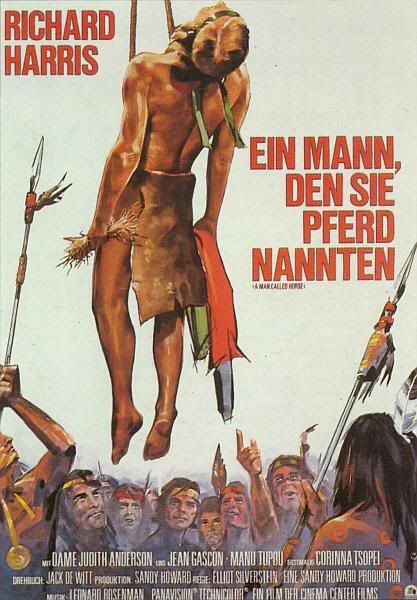
A Man Called Horse (1970)


 A Man Called Horse stars Richard Harris as Lord John Morgan, an English peer cast somewhat adrift in the American West. Captured by Sioux Indians, Lord Morgan is at first targeted for quick extinction, but the tribesmen sense that he is worthy of survival. The Englishman passes many of the necessary tests that will permit him to become a member of the tribe, the most grueling of which (and the one used most extensively in the film's advertising) is the Sun Vow Initiation. That's where his lordship is hung from the roof of a huge teepee with hooks through his pectoral muscles. Much of the dialogue is spoken in the Sioux language, though the film's much-vaunted "historical accuracy" is not altogether consistent, as witness the casting of British stage luminary Judith Anderson as Sioux woman Buffalo Cow Head. A Man Called Horse spawned warrant two sequels. Originally rated "GP" in 1970, it has since been re-rated R by the MPAA. ~ Hal Erickson, Rovi
 
R, 1 hr. 54 min.
Western, Action & Adventure, Classics
Elliot Silverstein
Jack DeWitt


Free movie thanks to  RezSnake

Twitter Delicious Facebook Digg Stumbleupon Favorites More