You may also like:

Related Posts Plugin for WordPress, Blogger...

El Topo, 1971

This violent and allegorical Mexican western attracted a cult following in its day. It is the story of El Topo, a gunslinger who sets out for revenge against the outlaws who slew his wife. ...

Faster Pussycat Kill Kill (1965)

Exploitation maven Russ Meyer created a cult classic with this turbo-charged action film. Three curvaceous go-go dancers in a cool sports car go on a desert crime spree, led by Varla (the amazing Tura Satana), a busty, nasty woman dressed entirely in black.

L'uccello dalle piume di cristallo (The Bird With the Crystal Plumage) (1969)

This trend-setting thriller put its director, Dario Argento, on the international map and began a flood of imitative mystery-horror hybrids which dominated Italian genre output in the early 1970s.

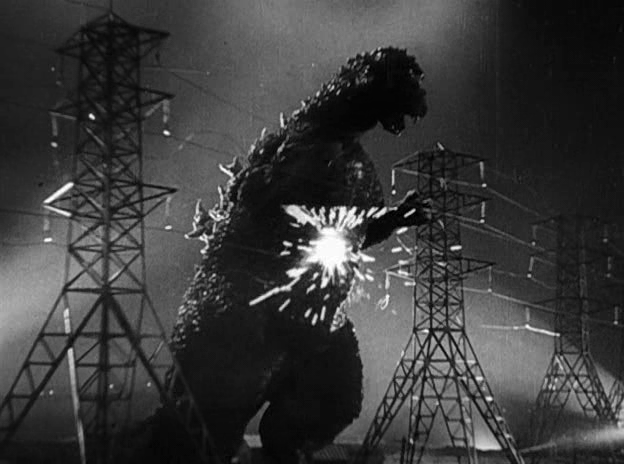
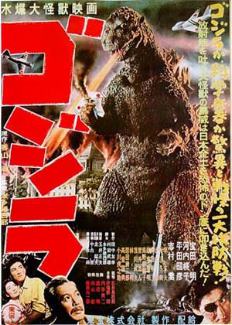
Gojira (1954)

One of the longest-running series in film history began with Ishiro Honda's grim, black-and-white allegory for the devastation wrought on Japan by the atomic bomb..

MAD MAX (1979)

This stunning, post-apocalyptic action thriller from director George Miller stars Mel Gibson as Max Rockatansky, a policeman in the near future who is tired of his job.

Showing posts with label Science Fiction. Show all posts

Monday, April 29, 2013

Attack of the Killer Tomatoes! (1978)


A group of scientists band together to save the world from mutated tomatoes that KILL! 


PG,
Horror, Science Fiction & Fantasy, Comedy
John De Bello 
Free movie thanks to  k3jloo 


Tuesday, April 23, 2013

Samson Versus the Vampire Women (Santo vs. las mujeres vampiro) (1962)


A masterpiece of mexican horror cinema with Rodolfo Guzman "El Santo" a real mexican wrestler who was the principal character in this kind of movies. In this film a professor recruits a professional wrestler to protect his daughter from sensual vampires intent on kidnaping her and marrying her to the devil. Legendary film of wrestling and vampires.

Unrated, 89 min.
Horror, Art House & International, Classics
Alfonso Corona Blake
Free movie thanks to: ProfessorCraigles


Gojira (1954)

One of the longest-running series in film history began with Ishiro Honda's grim, black-and-white allegory for the devastation wrought on Japan by the atomic bomb. As his visual metaphor, Honda uses a 400-foot-tall mutant dinosaur called Gojira, awakened from the depths of the sea as a rampaging nuclear nightmare, complete with glowing dorsal fins and fiery, radioactive breath.


Crushing ships, villages, and buildings in his wake, Gojira marches toward Tokyo, bringing all of the country's worst nightmares back until an evil more terrible bomb -- capable of sucking all the oxygen from the sea -- returns the monster to its watery grave. The original film is chilling, despite some rather unconvincing man-in-a-suit special effects, and brimming with explicitly stated anti-American sentiment. All of that was removed for the U.S. release directed by Terry Morse. It was replaced with bad dubbing and tedious added footage starring Raymond Burr. The resulting edit was just another monster movie, but was still popular enough to assure future Toho Studios monster films a wide American release. ~ Robert Firsching, Rovi (http://www.rottentomatoes.com)
Unrated, 1 hr. 38 min.
Action & Adventure, Horror, Art House & International, Science Fiction & Fantasy
Ishirô Honda
Free movie thanks to:  粥稀稀ZXX

Monday, April 22, 2013

Mad Max (1979)

This stunning, post-apocalyptic action thriller from director George Miller stars Mel Gibson as Max Rockatansky, a policeman in the near future who is tired of his job. Since the apocalypse, the lengthy, desolate stretches of highway in the Australian outback have become bloodstained battlegrounds. Max has seen too many innocents and fellow officers murdered by the bomb's savage offspring, bestial marauding bikers for whom killing, rape, and looting is a way of life. He just wants to retire and spend time with his wife and son but lets his boss talk him into taking a peaceful vacation and he starts to reconsider. Then his world is shattered as a gang led by the evil Toecutter (Hugh Keays-Byrne) murders his family in retaliation for the death of one of its members. Dead inside, Max straps on his helmet and climbs into a souped-up V8 racing machine to seek his bloody revenge. Despite an obviously low budget and a plot reminiscent of many spaghetti Westerns, Mad Max is tremendously exciting, thanks to some of the most spectacular road stunts ever put on film. 


Cinematographer David Eggby and stunt coordinator Grant Page did some of their best work under Miller's direction and crafted a gritty, gripping thrill ride which spawned two sequels, numerous imitations, and made Mel Gibson an international star. One sequence, in which a man is chained to a car and must cut off a limb before the machine explodes is one of the most tense scenes of the decade. The American version dubbed all the voices -- including Gibson's -- in a particularly cartoonish manner. Trivia buffs should note that Max's car is a 1973 Ford Falcon GT Coupe with a 300 bhp 351C V8 engine, customized with the front end of a Ford Fairmont and other modifications. ~ Robert Firsching, Rovi (http://www.rottentomatoes.com)


R, 1 hr. 33 min.
Action & Adventure, Science Fiction & Fantasy, Cult Movies
George Miller
George Miller
Free movie thanks to:  Sub Movie


A Clockwork Orange (1971)


Stanley Kubrick dissects the nature of violence in this darkly ironic, near-future satire, adapted from Anthony Burgess's novel, complete with "Nadsat" slang. Classical music-loving proto-punk Alex (Malcolm McDowell) and his "Droogs" spend their nights getting high at the Korova Milkbar before embarking on "a little of the old ultraviolence," such as terrorizing a writer, Mr. Alexander (Patrick Magee), and gang raping his wife (who later dies as a result). After Alex is jailed for bludgeoning the Cat Lady (Miriam Karlin) to death with one of her phallic sculptures, Alex submits to the Ludovico behavior modification technique to earn his freedom; he's conditioned to abhor violence through watching gory movies, and even his adored Beethoven is turned against him. 


Returned to the world defenseless, Alex becomes the victim of his prior victims, with Mr. Alexander using Beethoven's Ninth to inflict the greatest pain of all. When society sees what the state has done to Alex, however, the politically expedient move is made. Casting a coldly pessimistic view on the then-future of the late '70s-early '80s, Kubrick and production designer John Barry created a world of high-tech cultural decay, mixing old details like bowler hats with bizarrely alienating "new" environments like the Milkbar. Alex's violence is horrific, yet it is an aesthetically calculated fact of his existence; his charisma makes the icily clinical Ludovico treatment seem more negatively abusive than positively therapeutic. Alex may be a sadist, but the state's autocratic control is another violent act, rather than a solution. Released in late 1971 (within weeks of Sam Peckinpah's brutally violent Straw Dogs), the film sparked considerable controversy in the U.S. with its X-rated violence; after copycat crimes in England, Kubrick withdrew the film from British distribution until after his death. Opinion was divided on the meaning of Kubrick's detached view of this shocking future, but, whether the discord drew the curious or Kubrick's scathing diagnosis spoke to the chaotic cultural moment, A Clockwork Orange became a hit. On the heels of New York Film Critics Circle awards as Best Film, Best Director, and Best Screenplay, Kubrick received Oscar nominations in all three categories. ~ Lucia Bozzola, Rovi (http://www.rottentomatoes.com)
 
R, 2 hr. 17 min.
Drama, Mystery & Suspense, Classics, Science Fiction & Fantasy
Stanley Kubrick
Stanley Kubrick
Freemovie thanks to:  Retrofilms.in

Saturday, April 20, 2013

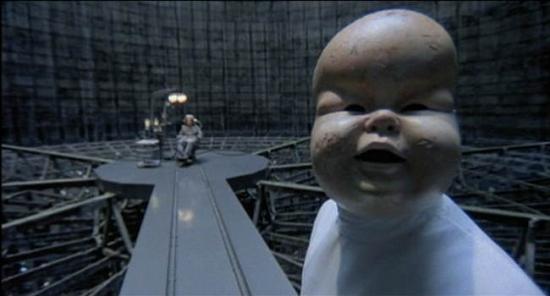
Brazil (1985)


Brazil constitutes Terry Gilliam's enormously ambitious follow-up to his 1981 Time Bandits. It also represents the second installment in a trilogy of Gilliam films on imagination versus reality, that began with Bandits and ended in 1989 with The Adventures of Baron Munchausen. To create this wild, visually audacious satire, Gilliam combines dystopian elements from Orwell, Huxley and Kafka (plus a central character who mirrors Walter Mitty) with his own trademark, Monty Python-esque, jet black British humor and his gift for extraordinary visual invention. 

The results are thoroughly unprecedented in the cinema. Jonathan Pryce stars as Sam Lowry, a civil servant who chooses to blind himself to the decaying, drone-like world around him. It's a world marred by oppressive automatization and towering bureaucracy, and populated by tyrannical guards who strongarm lawbreakers. And Lowry is stuck in the middle of this nightmare. Whenever real life becomes too oppressive, Sam fantasizes (to the tune of Ary Baroso's 1930s hit "Brazil") about sailing through the clouds as a winged superhero, and rescuing beautiful Jill Layton (Kim Greist) from a giant, Samurai warrior. The omnipresent computer that controls everything in the "real" world malfunctions, causing an innocent citizen to be arrested and tortured to death. When Sam routinely investigates the error, he meets - and pursues Jill , literally the girl of his dreams. But in real life, she's a tough-as-nails truck driver who initially wants nothing to do with him. It turns out that she is suspected of underground activities, in connection with a terrorist network wanted for bombing public places. The price Sam pays for his association with her is a close encounter with the man in charge of torturing troublesome citizens (Michael Palin). He is rescued - at the last minute - by maintenance man Harry Tuttle (Robert de Niro) who moonlights as a terrorist, but that only represents the beginning of his plight, for now the "system" is onto him. Gilliam ran into enormous problems with Brazil. Universal - which produced the picture - originally slated it for release in 1984, but the studio - intimidated by the film's whopping length of 142 minutes - demanded that Gilliam trim the film to bring it in under two hours and alter the pessimistic ending. Gilliam refused; Universal shelved the picture for a year. In response, the director took out a full page ad in Variety asking studio president Sid Sheinberg when the film would be released. Sensing tremendous pressure, Universal bowed to Gilliam's insistence on fewer cuts but still demanded a happy ending. Gilliam trimmed only eleven minutes and altered the conclusion just slightly (instead of cutting to black, it fades into puffy white clouds on a blue sky, with a reprise of the title tune). It was thus released in early 1985 at 131 minutes, and of course became a seminal work; many critics regarded it at the time as the best film of the eighties. ~ Nathan Southern, Rovi (http://www.rottentomatoes.com)

R, 2 hr. 11 min. 
Drama, Science Fiction & Fantasy, Comedy 
Directed By: Terry Gilliam
Written By: Terry Gilliam, Tom Stoppard, Charles McKeown
In Theaters: Feb 20, 1985

See the entire film here for free:

Twitter Delicious Facebook Digg Stumbleupon Favorites More